La nuit qui précéda sa mort

La nuit qui précéda sa mort

Fut la plus courte de sa vie

L’idée qu’il existait encore

Lui brûlait le sang aux poignets

Le poids de son corps l’écœurait

Sa force le faisait gémir

C’est tout au fond de cette horreur

Qu’il a commencé à sourire

Il n’avait pas UN camarade

Mais des millions et des millions

Pour le venger il le savait

Et le jour se leva pour lui.

Paul Eluard, Avis, 1943.

The truth we hold. In conversation with Fedir Rudyi.

As I write 289 writers have already been killed in the war in Ukraine — not counting the witnesses whose stories will never be told. Kyiv Desk strives to ensure that those targeted day after day by the Russian army are not silenced. Fedir Rudyi has agreed to speak with us about his latest book, “Pozitsia” (Position). His testimony is so powerful that it needs no introduction.

DdN – It’s a real pleasure to sit down with you, Rudyi. Let me start with a few simple questions: where did you grow up, and how did literature first enter your life?

FR – I am truly glad to be having this conversation with you, brother. Thank you for your support of Ukrainian culture and our army. This is a very good question. I was born and raised in the small town of Brovary, near Kyiv. My family was not wealthy, and from an early age we lived with many limitations. My younger sister and I did not have expensive toys or game consoles like our peers. In fact, I only got my first computer when I was already at university. So while my friends were discussing new video games and spending most of their time in front of a screen, I had one passion and one form of entertainment — reading.

We had a fairly large library at home. My grandfather and my father loved to read and would constantly buy books. When I was at school, the best birthday present from my father was always a new book. I read a lot — every single day. Once I had read everything at home that interested me, I began borrowing books from the school library. Later, I registered at two more libraries in our town.

My favorite writers at that time were Jack London, Jules Verne, O. Henry, Mayne Reid, and Mark Twain. Even before we studied them at school, I read Hugo’s The Hunchback of Notre-Dame and, on my father’s recommendation, The Man Who Laughs. I also remember reading short stories by James Aldridge.

I took quiet pride in understanding and knowing things my classmates had never even heard of. I loved historical classics — Stevenson’s The Black Arrow, Walter Scott’s Ivanhoe. I was also fascinated by historical novels by Ukrainian authors about the heroic age of the Cossacks and our people’s struggle for freedom. I read about Kyivan Rus and its great princes — Sviatoslav the Brave, Volodymyr the Great.

I adored stories about Native Americans and, of course, devoured the books of Fenimore Cooper and the stories of Ernest Seton-Thompson. I would seize new books the way children grab sweets, and in the evenings after school I would plunge into the unknown worlds of literature.

During my university years, I discovered Stephen King. I read a great deal of Remarque, Somerset Maugham, and Hemingway. I was deeply struck by Faulkner’s style. I even read Hesse and Max Frisch.

As time passed and I grew older, I read less and less. There was never enough time, never enough strength. But in the trenches, seeking some small escape, I returned to reading. It was an illusory escape from reality — yet it worked. I cannot remember all the books I read at the front, but fantasy was the easiest to absorb: the fairy-tale world of Sapkowski’s The Witcher and the Meekhan Empire of Robert Wegner.

I also wrote a great deal. At first poetry, and later short stories about my military experience — humorous trench anecdotes at first, and later tragic ones. It was important to me to describe my brothers-in-arms as vividly and fully as possible, there on the edge between life and death. To show how we live, what we think, how we cope with fear and despair. To describe how we change.

So I can say that literature has always been with me, supporting me in difficult moments. It helps one endure the hardest experiences in life — though it demands something in return. As a writer, I feel both the need and the duty to write about this war, even if revisiting certain themes and stories means reliving the pain again in my own mind.

DdN – The imminence of death means that it is better to write an imperfect poem than no poem at all — even if your brother-in-arms might very well ask you: “Why did you choose that word?” or “Are you sure that’s the right one?”. This, I believe, is an extraordinary exchange. Could you tell us more about your friendship with Serhii Rubnikovytch, and how you support one another as writers and brothers serving on different sections of the front?

FR – Whatever you do in life, you need someone beside you. Someone who believes in you. Someone who pushes you forward when you’re exhausted. Someone who reminds you why you started. Someone who understands you, especially when everything feels pointless. For me, that person is Serhiy. And what binds us is literature.

We met a few years before the full-scale war, at a poetry competition. I remember being struck by how good he was — not just talented, but unmistakably himself. Strong imagery, bold metaphors, a rhythm that didn’t sound like anyone else. We started talking about books, about poems, about what writing should be. Hours would pass. It quickly felt like we’d known each other forever.

We became each other’s first readers. Real ones. I read his unfinished fantasy trilogy; he read my unpublished novel. We went through each other’s poems line by line. Even the best writers need someone they trust to tell them the truth — and it’s even better when that someone is a fellow writer. We were perfect « beta readers » for one another.

Serhiy is meticulous. If the rhythm stumbles, he fixes it. He loves the craft itself — the precision of it. I’ve learned a lot from him. I tend to be more forgiving, sometimes thinking a rough edge can add something human. Rubik doesn’t let me get away with that. He spots the lazy line my tired eyes miss — and makes me rewrite it. I try to return the favour, though his poems are usually tighter than mine.

When Russia invaded, Serhiy joined the army. I stayed behind at first, volunteering where I could, trying to be useful — but it always felt like it wasn’t enough. I carried a quiet shame. By the end of 2022, it was clear this war wasn’t ending anytime soon. I enlisted. Partly because I knew that if anything happened to him while I stayed home, I would never forgive myself. We’re fighting not just for territory, but for survival as a Nation. It doesn’t matter what you do, you must do what you can.

We ended up in different brigades, different sectors of the front. But we never stopped reading each other, encouraging each other.

War changes poetry. It’s no longer about clever lines or beautiful metaphors. It becomes a way to survive what’s happening. To record it. To make sense of it. Serhiy once told me he stopped reading civilian poetry during the war — it felt detached, almost unreal. I agree and understood exactly what he meant. Poems written in the trenches are written at the edge of life. Sometimes you don’t know if you’ll still be alive tomorrow. When we read the poems of other soldiers, we recognise ourselves in them — the fear, the exhaustion, the dark humour.

Serhiy has a gift for writing about war without losing irony. He can talk about pain and death with a clarity that doesn’t feel theatrical. Because we constantly exchanged poems, it sometimes feels like we’ve been writing one long book together — two voices telling the same war from slightly different angles. I believe that when Rubik’s collection is published, our books will complement each other perfectly — like two halves of a bigger whole.

Most of my war poems were written in trenches, often in a rush, with no time to polish a line. I knew, as I wrote, that it could be the last thing I ever wrote. When I managed to reach a position with internet and post a poem, it felt like a small victory. And when Rubik pointed out a weak line, I rewrote it. As he once put it: « War is no excuse for writing badly ».

His opinion matters to me, and mine matters to him. I’m grateful we found each other.

Recently, I became godfather to his son. So now we’re not just brothers in arms — we’re family. My daughter adores “Uncle Serhiy.” Our wives are friends. All we really want is to live quietly, in peace. But the war goes on. We are planning to serve together in the same unit. I hope it will happen.

DdN – We tend to think of friendship as a private virtue but I’m struck by the role it plays as an organising force. People enlist to stand alongside a friend, they fight shoulder to shoulder, and they return to battle because they can’t bear the thought of failing each other. There is nothing romantic about it. Friendship is not a charming detail — it’s a powerful force that makes resistance possible. Would you agree?

FR – Yes, I totally agree with that.

People go to war to defend their country and their land. They fight for freedom and for a better future. But those are abstract ideas. What truly drives you is something concrete. We are defending our families. Our children. After Bucha and the liberation of occupied territories, everyone understands what the occupiers do. They kill. They rape. They show no mercy. And the only way to stop them is on the battlefield — preferably as far from home as possible.

But the real phenomenon of war is frontline friendship. When your life depends on the person next to you, bonds form that are incredibly strong — sometimes stronger even than family ties. Because only a fellow soldier truly understands. That person becomes closer than anyone else.

War is hard. Some things go beyond what a human being should ever have to endure. But you can’t step back, knowing you would be letting your brother or sister in arms down. Everyone carries the same weight, and if one person drops it, it becomes heavier for the rest. That’s why the most heroic acts are driven by the desire to help a friend, to save them — or to avenge those who have fallen.

The enemy may think that by killing Ukrainians they are weakening our resistance. In reality, they are giving us more reasons to stand our ground until the very end.

DdN – As you mentioned earlier, most of your poems were written in the trenches—hence the title of your collection, “Position”. In fifty years’ time, these poems will be read as some of the most important and precise testimonies of this major conflict, much as we read the poems of Siegfried Sassoon or Wilfred Owen to understand the First World War. Your book is divided into seven sections, each illuminating a different aspect of this human experience. Did this structure emerge when you brought the poems together? How did it take shape for you?

FR – I very much hope that the work of Ukrainian combat poets will find a visible place in literature, and help people better understand this war and those who are living through it. It is gratifying to know that my own poems might be part of that poetic landscape. But it still feels strange to hear myself compared to these great poets. Time will be the best judge of my work—I was simply trying to write about what I saw and felt.

At first, I had no idea what my book would look like, or even whether it would exist at all. About a year into my service in the infantry, when I had already written around twenty poems, I began to write short prose stories about life in the trenches. At first they were light-hearted, humorous pieces — for instance, about the mice. There were so many of them, and they gnawed at everything around us: charging cables, clothes, and any food they could reach. When we slept, they would crawl out of their holes into the dugout and hold dance parties, or rehearse marching drills in military step. One-two, three-four… In a single day we could catch more than ten mice with sticky traps. It was a real war. Though I always felt a little sorry for them. Later on, the mice even saved the life of one of my comrades. When a blanket in the dugout caught fire from a gas heater, the mice woke him with their squeaking. Otherwise, he might have suffocated in the smoke.

For a while I even thought of combining poetry and prose in a single collection. But the texts kept multiplying, and eventually I realised they had to become two separate books.

When I had gathered enough poems for a full collection, I still hesitated to send the manuscript to the publisher. It felt as though something was missing — a few final pieces of the puzzle. Some of the most important poems were written after I had left the infantry. One of them is about the city of Vuhledar, where I was wounded during the defence and where many of my comrades were killed.

Around that time I also developed a clear vision for the structure of the book. I did not want to arrange the poems randomly or according to the order in which they had been written. The texts differed in style and mood, and it seemed logical to group them. Some categories were obvious from the beginning: humorous poems, poems about Home, poems about Death. In the very first section I placed those texts where a certain romantic vision of war still lingered — along with faith and hope. Later there appeared a section devoted to everyday military life, and another called Frozen Words, for the more figurative poems, dense with metaphors. After some hesitation, I also decided to include a section with several poems written before the war that had not appeared in my previous collection. In one sense they may seem out of place among the war poems, but in another they represent a part of my former self — revealing the contrast and the changes in my writing.

And in Kramatorsk, in the Donbas, while editing the final manuscript, I remembered that I had once been a painter and decided to create the illustrations and the cover myself. Coffee, instead of watercolour, turned out to be perfect for capturing the colour of trench clay and the atmosphere of the trenches.

I am not particularly fond of numerology, but I did notice a certain play of numbers. The book has seven sections (a good number — originally I planned either five or seven). Most of the sections also contain seven poems. In total there are forty-three poems in the book, and 4 + 3 equals 7. So I hope that these three sevens will bring the collection a little luck…

DdN — I hope this doesn’t sound pompous, but your book has a distinctly shakespearean dimension. Some poems are incredibly moving. Others, as you rightly pointed out, are downright funny. ‘Let’s look on the bright side: the man who dies today won’t have to die next year,’ quips Shakespeare in Henry IV, Part Two. There is a good deal of that kind of gallows humour in your poetry. Shakespeare uses the character of Feeble to satirise army recruitment, and you wrote a brilliant poem to poke fun at those military pieces of advice that proved utterly useless on the ground. It almost seems that war poetry cannot function without laughter — especially in Ukraine. Would you agree?

FR – Yes, you’re absolutely right about gallows humour. In war, laughter is the best way to fight fear and stress. Serhii Rubnikovych once said: “As long as I can laugh, I’m alive.” And that’s true. If we can see something funny in a situation, something absurd, it stops being so frightening.

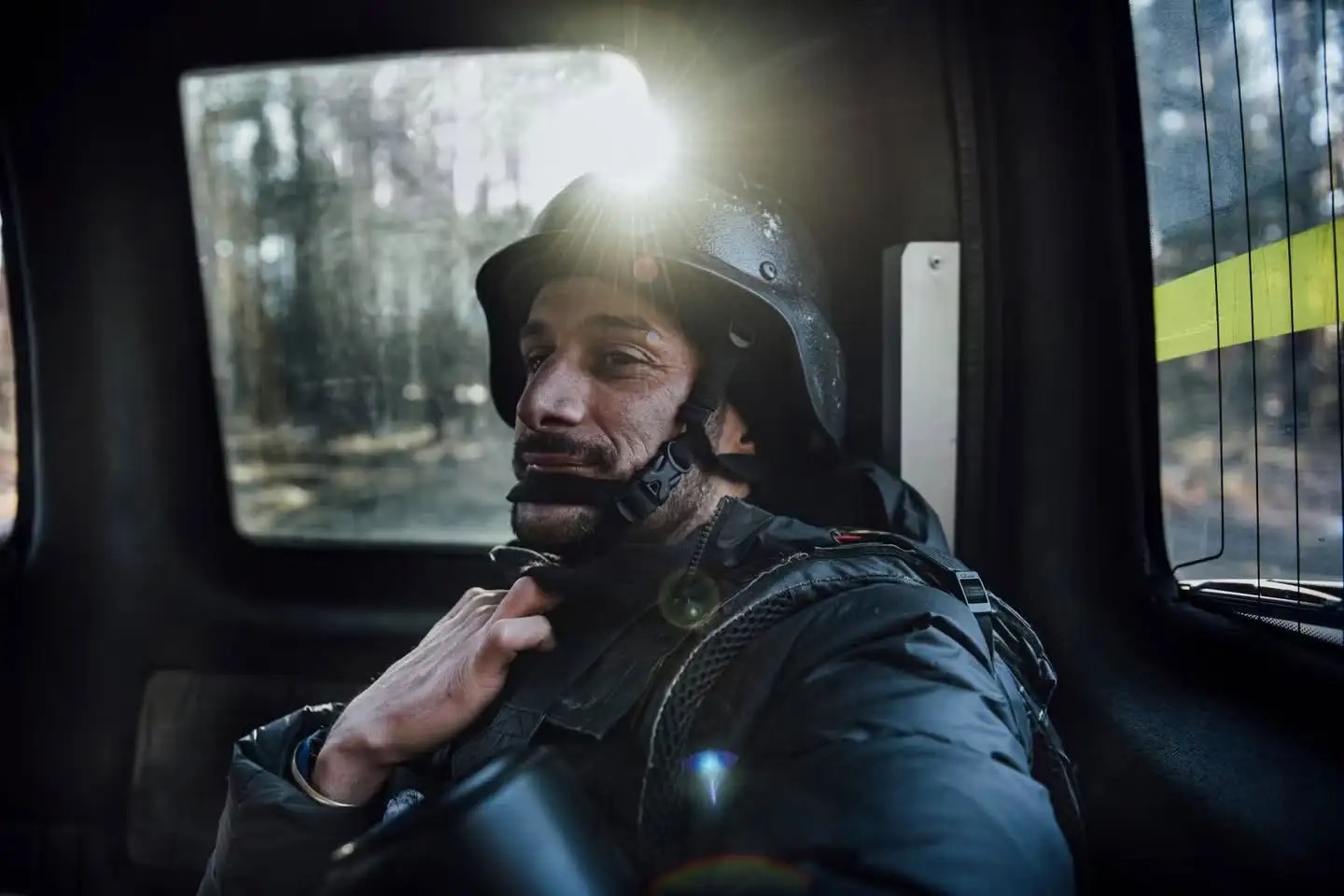
That was the case the first time I went on a combat mission and forgot my helmet. At the time it felt like a fatal mistake, a nightmare. But soon I was joking that next time it would be better to forget my rifle, because it’s heavier to carry. Another constant subject of jokes was the soldiers’ fear not just of dying, but of dying in the trench while going to the toilet. When you’re sitting there with a roll of toilet paper, you listen to every sound and think: “Just not here… The main thing is not to die here…” Because it feels like such a death would be shameful.

But we always supported each other and promised that even if it did happen, we would tell everyone it was a heroic death. In battle, of course. And afterwards they would award a medal “For Courage.”

Black humour is an important part of Ukrainian military culture. For soldiers, dark jokes are like fuel for military vehicles: without them you can’t keep going through pain and loss.

We laugh at the enemy, we laugh at each other, but most of all we laugh at death.

My favorite joke had to do with my civilian profession. In the trenches I used to say I went to war to expand my client base. In civilian life I worked for a company that makes gravestones. As an engraving artist, I carved portraits of the dead into stone. So with a completely serious face I would offer my comrades a discount on a monument.

“It’s a very good deal,” I’d explain. “Stone gets more expensive every year, but this way you can lock in the price. And it’s something you’ll definitely need. Equipment can break down, smartphones need upgrading, clothes wear out—but a gravestone is a purchase for life. It doesn’t spoil, it doesn’t rust. You buy it once and never worry about it again. Besides, classics are always in fashion. You can keep it in the garage, or hide it under your bed. You could even arrange storage with our company. You just need to dust it once in a while.”

Humour has an important place in war poetry. Just as it’s impossible to write army dialogue without swear words, it’s hard to imagine a book about infantry without dark humour. And I’m glad that at one time I managed to write a little with irony, because later, from fatigue, exhaustion, and the loss of friends, it became difficult to write cheerful poems.

DdN – Look, I’m not entirely sure we’re capable of bringing this conversation to a close—but let’s give it a try. If I had to suggest a place to begin for someone who has never read you, I would recommend three poems: «Позиція» (Position), because it is already a classic; «Те, що завжди зі мною» (The Things I Always Carry With Me), for its humour and precision; and «День, коли» (The Day When…), for the breadth and extraordinary humanity that emerge from your book. Is it a sensible choice ? Which poems would you pick if you were to guide a newcomer through your own work ?

FR – I was kind of expecting a question like this, and I’ve always felt a bit uncomfortable judging my own poems. Of course, some of them seem more successful to me than others, but it’s hard to say, “this is the one I love most.” Because this isn’t really poetry in the classical sense. It’s a reflection on war. I didn’t enjoy writing it, and I wasn’t trying to create a masterpiece. And yet the writer’s instinct, the sense of what makes a good poem, doesn’t disappear even in war.

When I was writing in the trench, I was trying to catch fragments of the reality around me — stories, emotions, thoughts. Smells, atmosphere. Something that would allow the reader, at least in part, to feel what soldiers feel. Some of these texts don’t even look like poems. There have very few metaphors, very little imagery. But they carry the truth.

Your selection of poems is very good, and I agree with it. The Things I Always Carry With Me is a special one, where I talk about my amulets — including a toy frog my daughter gave me. But I would add “Wish” as well. It’s about memories of home, and about a small ritual. Every evening my daughter would look for the first star in the sky and make a wish that I would come back home. When I was on duty in the trench, I would also look at the stars and make the same wish. That’s what connected us, even without any way of communicating.

I would also single out the ironic poem about the shovel. For infantry soldiers, it’s a special tool — almost a symbol. The deeper you are in the ground, the better your chances of survival. The poem Gravity captures the feeling of standing night watch in winter, when time freezes and barely moves. As for Position, I completely agree — it’s one of the strongest and most poetic pieces in the collection. I wrote it after a comrade of mine was killed by a sniper’s bullet.

There’s also a very important text about Vuhledar. Our brigade defended that town for a long time against overwhelming forces, and it remains a special place for all of us. But the most important poem for me personally is Countdown. Hopscotch. Because remembering the dead is at the heart of a soldier’s culture. It was very hard to write, but I had to. My comrades drew the lot — they will remain forever in the soil of Donbas, while we are still alive. And it’s our duty not to let others forget. Because as long as we remember, as long as people read about my fallen friends, they are still alive. But how do you fit the memory of a person into a single stanza? Their character, their habits, their face? I tried. I hope I managed.

You also mentioned the poem The Day When… I wrote it specifically to close the book. It had to bring everything together, to complete the overall picture. And it seemed to me that the best way to do that was to write about our future — if we survive. When the war ends. I can see it very clearly: a warm summer day, the sunflowers drying in the fields, the road home. The chance to breathe, to finally relax, to return to our families.

But we will never forget what we went through here. We will never let go of what we lost. And we will return, inevitably, to the land freed from the enemy. We will walk those same paths where there was death everywhere — and now, silence. A thick, dead silence.

I know I will go back to that position where we held the line, where against all odds we survived. Because that piece of native land will forever be my second home. That’s where I was born again — where I became who I am now. I will go back there, climb down into the trench, touch the walls. I’ll find my callsign carved with a knife into one of the beams. I’ll remember everything good that happened there. All my friends — their faces, their smiles. And I’ll hear their voices in the whisper of the trees.

Kyiv-Kramatosk, March 2026.

Fedir Rudyi @ DdN, Kyiv, mars 2026.

L’Axe du Mac

« Epic Stupidity », voilà comment le général Yakovleff a rebaptisé l’opération militaire spéciale de Donald Trump – et il paraît difficile de lui donner tort. Jamais chef de guerre plus colérique, confus, imprécis, insultant – et pour finir stupide – n’aura foulé terre étrangère – sauf peut-être Publius Quinctilius Varus à la bataille de Teutobourg, et encore. Non seulement ses appels à l’aide sont contradictoires avec le ton triomphaliste qu’il affiche en toutes choses, non seulement son triomphalisme en stuc ne trompe personne, mais Donald Trump perdra sa guerre en raison des Shaheds – ces mêmes Shaheds dont les MAGA se sont toujours fichus en Ukraine. En somme, ces bons chrétiens sont en train d’être punis par où ils ont péché.

L’ironie de l’Histoire a fait son grand retour depuis que Donald Trump n’a plus les cartes en main et que le KGBiste et le MAGA se retrouvent comme des imbéciles au milieu du gué. N’en déplaise aux supporters français de Donald Trump – ces réalistes qui n’ont rien vu venir –, l’Europe est aujourd’hui la seule puissance capable de résister à la folie des kleptocrates qui n’ont d’autre solution que de mener des guerres en cascade pour ne pas affronter la justice dans leur propre pays – cette Internationale qu’Anne Applebaum appelle « Autocracy Inc. » et que nous pourrions appeler, en hommage à Epstein, l’Axe du Mac.

On dira que l’Europe est une puissance impuissante, mais elle empêche un autocrate de remporter la mise dans un pays qui ne lui appartient pas – ce qui n’est pas rien. On dira l’Europe incohérente, mais cette incohérence vaudra toujours mieux que la cohérence qui relie Orban à Fico, et Fico à Poutine. Ou Poutine aux mollahs, au cas où les trumpistes n’auraient toujours pas fait le rapprochement entre le sort des Iraniens et celui des Ukrainiens sous l’emprise sanguinaire de ces deux totalitarismes.

Paul Conroy (1964-2026)

Paul était une figure incontournable de cette petite faune que l’on rencontre sous les drones à Kramatorsk — perspicace, ironique, hilarant. Comme tous les esprits délicats dissimulés derrière des airs de capitaine impassible, il ne se sentait bien que dans une merde noire — qualité rare chez un écrivain. J’emploie ce mot advisedly, parce que Paul est l’auteur d’un livre, Under the Wire, dans lequel il retrace son périple dans la Syrie en feu de 2012. Comment décrire de l’intérieur le sort fait aux civils ? Comment décrire la brutalité méthodique d’un régime sanguinaire ? Après avoir tué son amie Marie Colvin et le jeune photographe français Rémi Ochlik en bombardant volontairement un centre de presse, le tortionnaire Assad devait trouver refuge à l’étranger — et il est inutile, je crois, de préciser où.

« You have to stand up for what is right »

Repose en paix, Paul. Ton travail n’est pas terminé – mais c’est le seul qui vaille la peine.

L’ouverture de la chasse

Je partage avec les amis le fruit de mes entretiens à Soumy avec l’espoir d’apporter quelques précisions sur la situation militaire ici. Contrairement à mes impressions de départ, la préoccupation majeure n’est pas liée à la prise de la ville – prise qui suppose des moyens bien plus importants que ceux que déploient les Russes pour reprendre, par vagues de missions suicides successives, les villages alentour. Ce qui ne veut pas dire que le front va se stabiliser au Nord-Est et que les choses vont s’arrêter là, tant s’en faut. On peut échouer à prendre une ville importante, mais il est toujours possible, naturellement, de cibler les habitants ou de leur faire vivre un enfer. Il suffit pour cela de faire voler une bonne dizaine de drones kamikazes, et – miracle de la technologie – les voilà contraints de courir sous les arbres ou de passer de cave en cave pour échapper à la mort.

Le safari humain qui se déroule depuis des mois à Kherson nous fournit, sans conteste possible, le meilleur exemple. Cette chasse à l’homme (aujourd’hui bien documentée par les multiples reportages de la journaliste Zarina Zabrisky), présente cet intérêt d’être à la fois un exercice de travaux pratiques (on s’exerce sur des cibles que l’on peut tuer sur le coup, ou, à tout le moins, blesser à vie) et un objet de délassement (il est très amusant de poursuivre un être humain dans les rues, surtout si le drone FPV est muni d’une charge explosive).

Bien qu’un tel scénario soit tout à fait envisageable ici (un premier drone est tombé, sans faire de dégâts, au milieu de Sorobna – l’une des rues centrales de la ville), le plus important est ce qui différencie les deux théâtres. Kherson est défendue par un fleuve – alors que Soumy ne l’est pas. Soumy est entourée par une forêt, et c’est sur cette forêt que, au niveau tactique, tout se joue. Le combat en forêt n’a rien à voir avec l’engagement en terrain découvert. Un drone est d’une efficacité redoutable dans une zone dénuée d’obstacles, mais, de même qu’il est inutilisable sous la pluie, il devient inopérant au beau milieu des arbres. Là, le nombre l’emporte – et c’est justement sur le nombre que les Russes entendent, tout à fait classiquement, remporter la guerre (primauté de la masse sur la finesse tactique, pour parler comme les militaires). Il se trouve que Soumy est entourée d’une vaste forêt. Il se trouve que des champs séparent encore les villages conquis et les positions ukrainiennes. Surveillés comme le lait sur le feu, entièrement minés, c’est sur ces quelques lopins de terre balayés par la pluie que se jouera demain le destin de la ville.

Photo : Sumy region, Ukrainian fighters getting into position in the early hours of the day. Copyright undisclosed

Son Excellence

À l’heure où j’écris ces lignes, il se peut qu’à Paris, dans son appartement de l’avenue Élisée-Reclus juste en face de celui que nous habitions, Paul Morand donne une réception en l’honneur de Goering. Et dehors, sous les fenêtres, près des massifs de fusain, de laurier et de lilas, il y a des promeneurs qui flânent sous les platanes. Comme autrefois. Et dans le salon de Morand, que de visages je reconnaîtrais… Il se peut – pourquoi pas ? – que quelqu’un prononce mon nom et dise : « Pourquoi est-il parti ? Il n’avait qu’à rester ici. On ne lui aurait rien demandé, sinon de continuer à écrire ses livres qui auraient paru en France, et en traduction à Berlin ; on lui aurait conseillé de se montrer de temps en temps, dans les salons comme celui-ci, de serrer la main à de charmants officiers nazis et à leurs femmes, de signer un exemplaire de son dernier roman pour Emmy Goering… » La longue tristesse de l’exil me paraît belle en comparaison de ces facilités. Je ne pourrai jamais me résoudre à faire quelque chose qui soit en contradiction avec ce que je suis, qui me mette violemment en contradiction avec moi-même. Je ne suis pas, très loin de là, de l’étoffe dont on fait les héros, je suis timide et mobile, mais le goût, non, la passion d’une certaine logique m’a épargné un certain genre de mauvaise action, je veux dire la trahison pure et simple.

Hier soir, j’ai lu avec une profonde mélancolie le récit d’un thé chez Morand en 1942. Je ne juge pas Morand. Dieu le fera mieux que nous ne saurions le faire, mais si ces lignes tombent jamais sous les yeux de ce pauvre écrivain, qu’elles lui disent tout au moins que nous ne sommes pas fiers de lui, nous qui croyons à la France.

Julien Green, Journal

Requiem pour un front

Alors que leur champion profite de sa fonction pour s’en mettre plein les poches, alors que sa politique étrangère lui met les Américains à dos et que ses propos sur les soldats européens trahissent une ingratitude sans pareil, les partisans français de Donald Trump ont décidé de serrer les rangs comme on serre les fesses avant de se jeter dans le vide. De même que Monsieur Bardella pédalle dans la choucroute toutes les fois qu’une question un peu sérieuse lui est posée, Madame Le Pen multiplie les tournures alambiquées pour ne pas voir que son modèle en politique est en fait – ce sont des choses qui arrivent – un crétin fini. Il revient à ces patriotes de défendre leur modèle jusqu’au ridicule, et même jusqu’à la collaboration. Trump envahirait-il notre pays que le gaulliste Pascal Praud – qu’on me pardonne cette antiphrase comique – nous apprendrait que ce conquérant a bien raison, que sa philosophie est d’une finesse inusitée et que sa vision du monde, décidément, est excellente.

Ces bons chrétiens nous font irrésistiblement penser à cette parole de l’Evangile : les premiers seront les derniers. De même que les communistes furent les derniers à comprendre la vraie nature du communisme, les Trumpistes de la première heure seront les derniers à comprendre la vraie nature du trumpisme. Sa défense de la liberté d’expression est une pitrerie, sa défense de la démocratie une vaste blague, et il n’est pas jusqu’à son amour de la Paix qui ne se révèle pour ce qu’elle est : une tentative pour fonder l’Internationale du crime sur le dos des autochtones. Trump pourrait terminer cette guerre en 24 heures s’il précipitait la chute du Kremlin en armant l’Ukraine ; mais il faudrait pour ce faire que sa vision des rapports de force ne soit pas celle de Poutine. S’en prendre aux démocraties libérales en Europe, passe encore – mais s’en prendre au despote russe, voilà qui lui arracherait le cœur.

On dira que Donald Trump ménage son grand ami Poutine par réalisme, mais Pierre Laval aussi souhaitait la victoire de l’Allemagne par réalisme – ce qui ne lui a pas empêché de connaître le destin fort réaliste qui fut le sien. Combien de temps les thuriféraires du tocard Carlson, les fans du gang MAGA et les poutinistes à la manque vont-ils tenir le haut du pavé médiatique avant de sombrer, à l’instar du très poutiniste et très oubliable Silvio Berlusconi, dans les poubelles de l’Histoire ? Les paris sont ouverts.

Monsieur Caron en a marre (note sur le bavardage des pharisiens).

Je comprends les raisons qui vous poussent à parler comme le vieux combattant que vous n’êtes pas, Monsieur Caron, mais – de grâce – ne faites pas de votre couardise personnelle un cas général. De nombreux Français – dont j’ai l’honneur de faire partie – sont déjà en Ukraine afin d’aider les soldats et leurs familles du mieux possible. Nous ne sommes pas ici parce que nous aimons la mort, mais parce que les politiciens comme vous nous font horreur. Il est certainement ridicule de se prendre pour André Malraux sur le front ukrainien, mais il est infiniment plus grave de raisonner comme le pacifiste Marcel Déat devant ses électeurs.

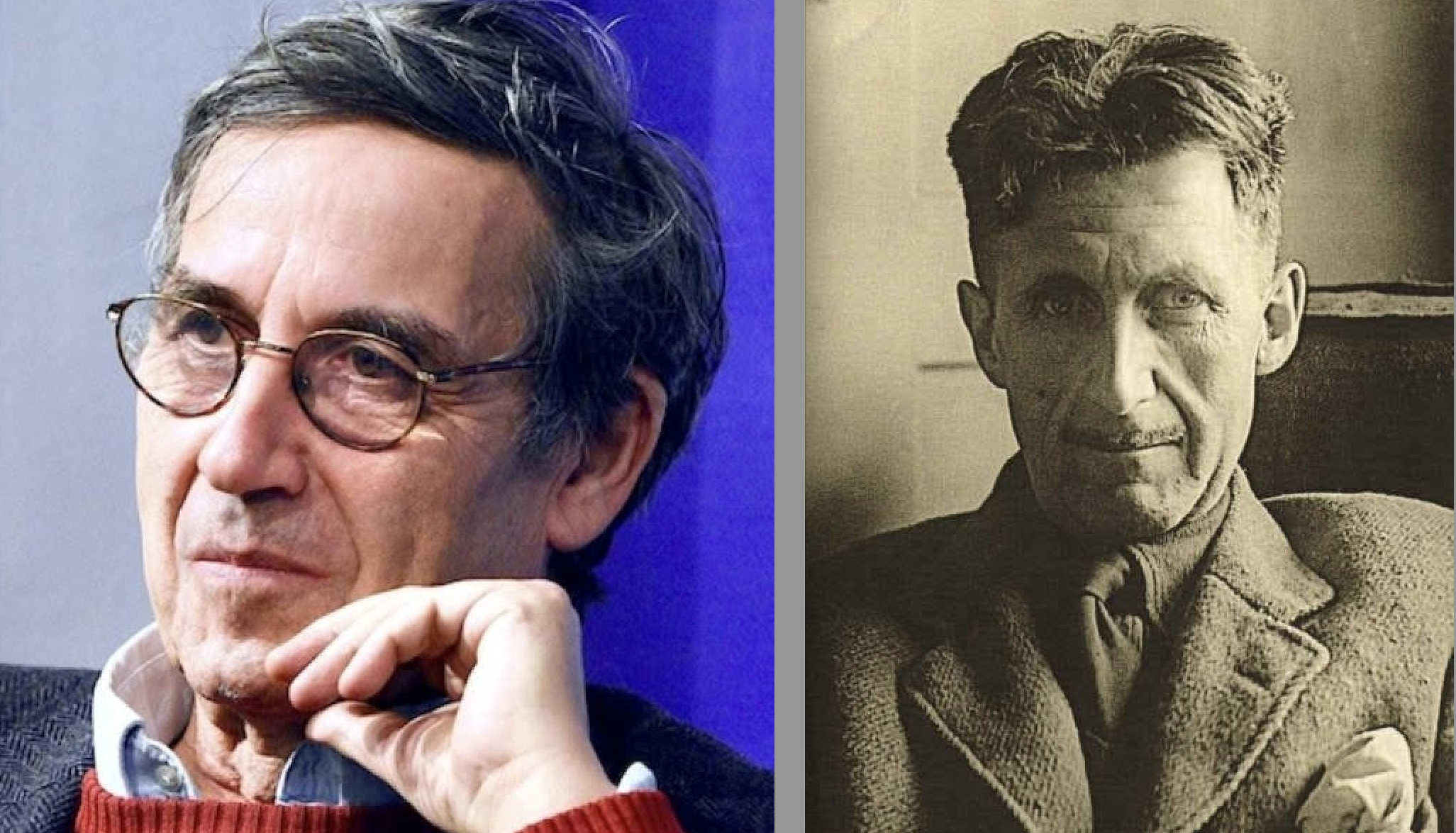
Puisque la paix vous est si chère et que vous citez cet auteur, je vous invite à relire un petit essai de George Orwell intitulé « Pacifism and the War ». L’auteur y démontre cette chose très simple : le pacifisme des uns sert toujours la violence des autres. Vous n’aimez pas le nazisme et vous n’éprouvez aucune sympathie pour Hitler ? Très bien. Et après ? « Objectively, the pacifist is pro-Nazi », écrit-il. Et ainsi en va-t-il de votre pacifisme. Parler de la paix dans l’abstrait ne coûte rien – la seule question d’Orwell étant : celle qui favorise l’agresseur ou l’agressé ?

Puisque votre fonction de député vous interdit de prononcer une vérité qui pourrait mettre à mal la bonne conscience décoloniale de vos sympathisants, écrivons-la sans détour : la « paix au plus vite » que vous appelez de vos vœux sera celle de deux prédateurs suffisamment confiants dans leur folie impériale pour s’imaginer pouvoir discuter du destin d’un pays sans consulter les premiers concernés : Poutine et Donald Trump. Pour l’heure, cette paix n’est pas autre chose que le produit d’un double racket, pillage que votre propre conscience décoloniale vous ordonne de condamner partout dans le monde, sauf lorsqu’il se déroule sous vos yeux. Très remonté contre la politique de la peur agitée par nos élites (comme si l’expression « vouloir faire des millions de morts » ne relevait pas, justement, du genre en question), incapable de peser sur les événements en raison d’un anti-macronisme pavlovien, toujours prêts à accuser ceux qui agissent d’être des « va-t-en-guerre » (répondre à la force par de belles paroles étant sans doute plus prometteur et judicieux), je note que vous en avez « marre » et que vous évoquez, une main posée sur le cœur, le sang des autres. Je ne doute pas que cet humanisme-là obtiendra de bons résultats parmi vos électeurs ; pour ma part, elle me fait irrésistiblement penser à cette phrase de Bernanos : « La colère des imbéciles remplit le monde, mais elle est moins à craindre que leur pitié. »

Kharkiv, 2025.